
In September, the UK Government announced the creation of a brand-new scheme to help eligible first-time buyers in England get onto the property ladder with a 2.5% deposit and a 20% equity loan from the Government.
Pre-registration is expected to open by the end of this year and full applications will be open in February 2027.
In the meantime, this guide will explain what we know about the scheme, as well as the help already available for first time buyers.

Key takeaways
- A new government scheme is set to launch for first-time buyers
- Smaller deposit required of 2.5%, alongside a government-backed equity loan of 20%
- For eligible buyers purchasing new-build homes (from participating homebuilders)
- Full applications will be open from February 2027, and first loans are expected to be issued from April 2027
- Total annual household income must be £110,000 or less outside London, or £140,000 or less within London
- There are property price caps which vary by locally authority - find out more
What is the Your First Home scheme?
The Your First Home scheme is a new UK Government backed initiative designed to help eligible first-time buyers in England purchase a home with a smaller deposit.
The scheme could enable you to buy a new home with a 2.5% deposit, along with a government-backed equity loan of 20%, helping buyers who might otherwise struggle to traditionally save enough to get onto the property ladder.
How will the Your First Home scheme work?
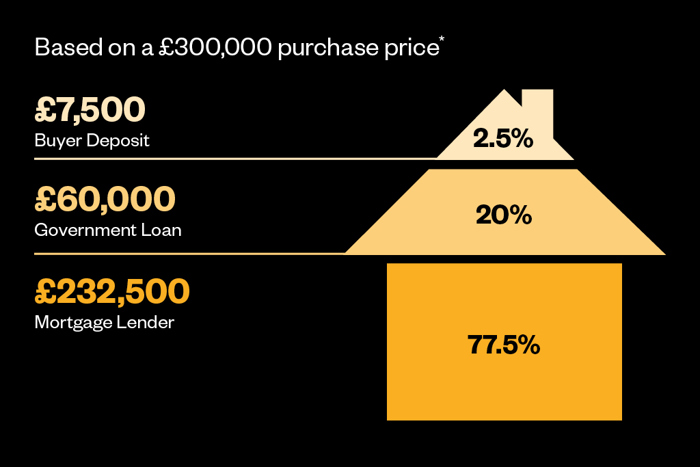
The Your First Home scheme will help buyers fund a new-build property through three components: their own deposit, a government-backed equity loan and a standard mortgage.
Buyers will contribute a deposit of 2.5% of the property's purchase price, with the Government providing an equity loan of 20%. We expect a mortgage would cover the remaining 77.5%, but of course this will be confirmed subject to the lender's affordability assessment and the scheme's final rules.
This example illustrates the announced funding structure, rather than a confirmed offer for a particular property or buyer.
What is an equity loan?
An equity loan is money you borrow to help buy your home, alongside your deposit and mortgage. It isn’t free money, you’ll need to pay it back.
Unlike a standard loan, it is linked to a percentage of your home’s value, rather than just the amount you originally borrowed. This means the amount you repay could go up or down if your home’s value changes.
A simple example
Using the £250,000 home in the example above, a £50,000 equity loan would cover 20% of its purchase price. If you still owed the full 20% when you repaid it:
- If your home’s value rose to £300,000, 20% would be £60,000 — £10,000 more than you originally borrowed.
- If your home’s value stayed at £250,000, 20% would be £50,000 — the same amount you originally borrowed.
- If your home’s value fell to £200,000, 20% would be £40,000 — £10,000 less than you originally borrowed.
This is an illustration of how a percentage-based equity loan works, not confirmed repayment terms for Your First Home. The final rules still need to be confirmed, including when you would repay the loan and any interest or fees. The figures above exclude any interest or fees and are separate from your mortgage repayments.
Who is eligible for the Your First Home scheme?
The Your First Home scheme is aimed at eligible first time buyers purchasing new-build properties in England. The Government has announced that household income must be £110,000 or less outside London, or £140,000 or less within London.
Property price caps will also apply in each area; there will be caps for inner and outer London.
A full list of price caps by local authority area is available here.
To be eligible you must be:
· be 18 or older
· be a first-time buyer
· be able to get a mortgage for at least half the price of the home
· not earn more than £110,000 a year before tax (£140,000 if the property is in London) - this is your income from the previous tax year
If you’re buying with others:
· you must all be first-time buyers
· you must apply together, even if you’re not all getting a mortgage
· your joint income cannot be more than £110,000 a year before tax (£140,000 if the property is in London)
Your joint income is the total of what you all earned in the previous tax year.

When will the scheme launch, and how do you apply?
Following the Budget (28th October 2026), the UK Government has announced the following timeline so far.
By the end of December 2026:
- customer pre-registration and guidance
- first developer registrations
February 2027:
- first customer applications
April 2027:
- first property sales under the scheme
What are the benefits?
The Your First Home scheme can offer a useful route onto the property ladder for eligible first-time buyers who have a reliable income but need support saving.
Benefits include:
A lower deposit requirement
The proposed 2.5% deposit could reduce the amount buyers need to save before purchasing a home. For people who can afford monthly repayments but struggle to build a large deposit, this could make homeownership more accessible.
A potentially smaller mortgage
With the Government contributing 20% of the purchase price through an equity loan, buyers would need a mortgage covering a smaller proportion of the property price than they would without that support. This can improve affordability for some applicants, although mortgage approval is never guaranteed.
A clearer route to homeownership
For eligible buyers who have been saving for years, the scheme could provide another option to consider alongside conventional mortgages and other first-time buyer support.

What buyers should do next
If you’re hoping to get onto the property ladder, now is a good time to talk to an independent financial advisor – the sales team on any of our developments can put you in touch for free, independent advice.
Want to move soon?
If you want to make your move now and don’t want to wait on the new scheme, Cala is already supporting many first-time buyers with a range of tailored incentives to help get you moving including deposit contributions.
Visit our First-time buyer webpage for more information.
Last updated 05.11.2026


